Introduction: The Living Legend
There are cars that are built, and then there are cars that are sculpted. The Morgan Cabriolet belongs firmly in the second category.
In a world of mass-produced, computer-designed automobiles, Morgan stands alone as the last bastion of traditional British coachbuilding — where ash wood frames are still crafted by hand, where aluminium panels are hand-beaten over wooden bucks, and where every car tells a unique story.
The Morgan Cabriolet, produced between 2005 and 2020, represents the perfect bridge between this centuries-old tradition and modern mechanical engineering. It's a car that looks like it belongs in a 1930s period drama but drives with a vigour that surprises even seasoned sports car enthusiasts.
Whether you're looking to buy a Morgan Cabriolet as a weekend toy, a classic investment, or simply to experience the purest form of driving pleasure, understanding what makes these cars special — and what to watch out for — is essential.
📜 The Evolution: Modern Heritage Timeline
🏁 2005–2010: The Early Years
The Morgan Cabriolet (often referred to as the "4/4 Cabriolet" or simply "Roadster" in some markets) was introduced as a more traditional, open-top alternative to the more modern Aero 8. While the Aero 8 featured a bonded aluminium chassis, the Cabriolet retained the classic Morgan steel chassis and ash wood frame construction.
Specification Detail
Chassis Traditional steel ladder frame
Body construction Ash wood frame with hand-beaten aluminium panels
Engine Ford Duratec 2.0L 4-cylinder
Power 145 bhp
Transmission 5-speed manual (Ford MTX-75)
Weight ~900 kg (1,984 lbs)
0-100 km/h ~7.5 seconds
Top speed ~185 km/h (115 mph)
🏁 2010–2015: The Mid-Life Evolution
The Cabriolet received subtle but important updates:
Update Detail
Engine 2.0L Duratec uprated to 160 bhp
Emissions Euro 5 compliant
Transmission Revised ratios for better driveability
Brakes AP Racing ventilated discs
Suspension Revised geometry for better handling
Interior Higher quality materials, better sound insulation
Cosmetics LED rear lights, improved hood design
🏁 2015–2020: The Final Chapter
The final years of production saw the Cabriolet reach its ultimate form:
Specification Detail
Engine 2.0L Duratec with 165 bhp
Emissions Euro 6 compliant
Transmission 5-speed manual (6-speed available on special order)
Weight 930 kg (2,050 lbs)
0-100 km/h ~7.0 seconds
Top speed ~190 km/h (118 mph)
Economy ~35-40 MPG (7-8 L/100km)
End of production: The Cabriolet was discontinued in 2020 as Morgan transitioned to the CX generation with bonded aluminium chassis.
🔧 Technical Deep Dive: The Morgan DNA
🏗️ Chassis & Construction: The Heart of a Morgan
The Steel Ladder Frame:
Traditional ladder chassis with cruciform bracing
Made from heavy-gauge steel box sections
Designed to flex slightly for improved ride comfort
Provides excellent torsional rigidity for a car of its era
The Ash Wood Frame (The Morgan Signature):
Created from sustainably sourced European ash
Hand-crafted by Morgan's skilled coachbuilders
The wood is treated with preservatives and sealed
Forms the skeleton for the aluminium body panels
Provides natural sound deadening and vibration absorption
The Aluminium Body:
Hand-beaten over wooden bucks (the Morgan "body on frame" tradition)
Lightweight (significantly lighter than steel)
Easy to repair — panels can be hand-shaped
Requires careful maintenance to prevent corrosion
💡 Interesting Fact: The ash wood frame is constructed in the same way as a traditional wooden boat — using steam-bent curves and mortise-and-tenon joints. Each frame takes approximately 150 hours to build by hand.
⚙️ Engine: The Ford Duratec 2.0L
Technical Specifications:
Specification Detail
Engine Code Ford Duratec 2.0L (I4)
Configuration Inline-4, naturally aspirated
Displacement 1,999 cc
Bore x Stroke 87.5 mm x 83.1 mm
Compression Ratio 10.8:1
Power 145-165 bhp @ 6,000-6,500 rpm
Torque 190-200 Nm @ 4,500-5,000 rpm
Valvetrain DOHC, 16 valves, variable cam timing
Fuel System Sequential multi-point injection
Induction Naturally aspirated (no turbo)
Engine Weight ~95 kg (209 lbs)
Engine Oil 5W-30 fully synthetic
Why the Duratec was chosen:
✅ Proven reliability (millions of units in production)
✅ Lightweight (only 95 kg complete)
✅ Smooth and free-revving character
✅ Excellent parts availability and support
✅ Compatible with Euro emissions standards
Performance Characteristics:
The Duratec is a "gem" — it loves to rev
Peak power comes high in the rev range (6,500+ rpm)
The engine is surprisingly torquey low down
Perfectly matched to the Morgan's character (effortless, engaging)
Common Tuning Options:
Upgrade Cost Power Gain
Remap/ECU tune £350-£500 +10-15 bhp
Cold air intake £200-£400 +5-8 bhp
Performance exhaust £500-£1,200 +10-15 bhp
Throttle body upgrade £300-£500 +8-10 bhp
Full induction/exhaust/remap £1,500-£2,500 +25-30 bhp
⚙️ Transmission: The Ford MTX-75 5-Speed
Technical Specifications:
Specification Detail
Type 5-speed manual, front-mounted
Layout Transverse
Gear Ratios 1st: 3.58:1, 2nd: 2.14:1, 3rd: 1.42:1, 4th: 1.03:1, 5th: 0.80:1
Final Drive 3.82:1
Synchromesh All forward gears
Clutch Hydraulic, 228mm diameter
Weight ~35 kg (77 lbs)
Why the MTX-75 was chosen:
✅ Lightweight (only 35 kg)
✅ Reliable and well-proven
✅ Excellent shift feel (direct and engaging)
✅ Strong enough for the Duratec's torque
🔧 Suspension & Handling
Front Suspension:
Independent double wishbone
Coil springs
Telescopic dampers (Bilstein or AP Racing)
Anti-roll bar
Rear Suspension:
Traditional live rear axle
Semi-elliptic leaf springs
Telescopic dampers
Panhard rod (for lateral location)
Brakes:
Front: 278mm ventilated discs (AP Racing on later models)
Rear: 270mm solid discs
Calipers: Single-piston sliding (2-piston optional)
ABS: Bosch system
Steering:
Rack and pinion
Manual (no power assistance) — yes, you read that right!
2.5 turns lock-to-lock
⚠️ Important: The manual steering is one of the Cabriolet's defining characteristics. It requires effort at low speeds but provides incredible feedback at speed. This is part of the Morgan experience!
⚖️ Weight & Performance Summary
Specification Value
Curb Weight 900-930 kg (1,984-2,050 lbs)
Power-to-Weight Ratio 161-183 bhp/tonne
0-100 km/h 7.0-7.5 seconds
Top Speed 185-190 km/h (115-118 mph)
Fuel Economy 35-40 MPG (7-8 L/100km)
💰 Market Values (2025 Analysis)
The Morgan Cabriolet has established itself as a solid classic car investment. Here's a realistic breakdown:
Model Year Good Condition Concours Condition
2005-2007 (145 bhp) €18,000 – 25,000 €28,000 – 35,000
2008-2010 (155 bhp) €20,000 – 28,000 €32,000 – 40,000
2011-2014 (160 bhp) €25,000 – 32,000 €38,000 – 45,000
2015-2017 (165 bhp) €30,000 – 38,000 €45,000 – 55,000
2018-2020 (165 bhp) €35,000 – 45,000 €50,000 – 65,000+
⚠️ Note: These prices are for standard models. Special editions, custom colours, and cars with extensive options can command significant premiums.
📈 Key Price Drivers
🔑 Mileage: Under 20,000 miles (32,000 km) adds 30-50% to the value
🔑 Service History: Full documented history adds €5,000-€8,000
🔑 Originality: Unmodified examples fetch 20-30% more
🔑 Colour: British Racing Green, Red, and Blue are most desirable
🔑 Condition of the ash wood frame: Critical for value (more below)
🔑 Vehicle Condition: Overall condition matters more than age
📈 Investment Potential
Year Average Value
2019 €18,000
2022 €25,000
2025 €35,000+
5-year increase ~94%
💡 Investment Tip: Low-mileage, well-maintained examples have appreciated significantly. The Cabriolet is considered a "sensible" classic car investment, with values expected to continue rising as Morgan moves towards more modern chassis designs.
🔍 Buying Guide: What to Check Before Buying
🛑 The Wood Frame (The Most Critical Check)
The ash wood frame is the soul of a Morgan — and its Achilles' heel. Water intrusion is the enemy.
What to check:
✅ Boot (trunk) floor: Lift the carpet — look for dampness, mould, rot
✅ Scuttle area: Where the hood (roof) meets the body — common water trap
✅ Door pillars: Check the wood around the hinge mounts for softness
✅ Under the carpet: Feel for moisture, look for stains
✅ A-pillars: Where the windscreen meets the body — rust can hide here
Test for wood rot:
Use a small, sharp object (like a screwdriver) and gently probe suspected areas
The wood should feel solid, not soft or spongy
Look for dark discolouration — indicates rot
Any noticeable moisture smell is a warning sign
💡 Pro Tip: A dry, well-stored Morgan will have wood that feels like oak. A damp one feels like balsa wood. The difference is thousands of pounds in repair costs.
🛑 Rust Inspection
Critical areas to check:
✅ Chassis rails: Especially around the front suspension mounts
✅ Sills (rockers): Check both sides thoroughly
✅ Wheel arches: Look for bubbling paint
✅ Underbody: Use a mirror and torch, look for rust on the floor pan
✅ Boot floor: Both inside and underneath
✅ Battery tray: Common corrosion point
Cost of repairs:
Minor rust: €1,000-€2,000
Moderate rust: €2,000-€5,000
Severe rust (chassis/wood): €5,000-€15,000+
🛑 Engine Health Checklist
✅ Compression test: All cylinders within 10% of each other
✅ Leak-down test: Identifies ring/valve issues
✅ Oil analysis: Reveals bearing wear, coolant leaks
✅ Cam timing: Check the variable valve timing mechanism (common wear point)
✅ Coolant system: Check for leaks, ensure proper operation
✅ Oil pressure: Should be 2.5 bar at idle, 4-5 bar under load
Common Engine Issues:
Issue Symptoms Cost
Cam timing mechanism Rattle on startup, poor low-end power €800-€1,200
Coil pack failure Misfire, rough idle €150-€300
Alternator failure Battery warning, dim lights €300-€500
Water pump leak Coolant loss, overheating €400-€600
Thermostat failure Temperature fluctuations €150-€250
🛑 Transmission & Drivetrain
✅ Gearbox: Smooth changes, no crunching (especially 2nd gear)
✅ Clutch: Bite point should be consistent, no slipping under load
✅ Propshaft: Check for play, vibration under acceleration
✅ Axle: Listen for whine on overrun
✅ Differential: Check for leaks, unusual noises
🛑 Suspension & Steering
✅ Leaf springs: Check for cracks, sagging, rust
✅ Dampers: Bounce test (should stop after 1.5 bounces)
✅ Bushes: Check for play, cracking
✅ Steering rack: No play, no leaks
✅ Track rod ends: Check for wear (clunking over bumps)
🛑 Brakes & Wheels
✅ Brake discs: Check for wear, scoring, corrosion
✅ Brake pads: Check thickness
✅ Brake fluid: Should be clear, not brown/black
✅ Wheels: Check for cracks, damage
✅ Tyres: Check age, condition, even wear
🛑 Electrics & Body
✅ Hood (roof): Check for tears, leaks, proper operation
✅ Windows: Check for smooth operation
✅ Heater: Check both heat and fan
✅ Lights: All lights functioning correctly
✅ Wiper motor: Check all speeds, smooth operation
✅ Body gaps: Consistent gaps indicate no accident damage
🧠 Expert Tips for Buying a Morgan Cabriolet
💡 Insider Knowledge
1. Choose Your Year Wisely
2005-2008: Purest driving experience, fewer electronics (less to go wrong)
2010-2015: Best value for money, improved reliability
2015-2020: Most refined, best performance, highest price
2018-2020: Last of the traditional Morgans — future classics
2. The "Dry Storage" Myth
Morgans are built to be driven, not stored
Cars that have been used regularly (especially in dry weather) are often in better condition than those stored for years
A car that has sat for 5+ years may have more issues than one used weekly
3. The Soft Top
The hood is expensive to replace (£2,000-£3,000)
Check for the correct fit — should be tight, no wrinkles
Look for signs of water ingress (water stains, mould)
4. Service History
A full Morgan service history adds significant value
Specialist independent servicing is acceptable (and often better)
Regular maintenance is critical — a car with gaps in service history is a red flag
5. Test Drive It Properly
Drive it on B-roads (where Morgans come alive)
Check for vibration at speed (wheel balancing, propshaft issues)
Listen for any rattles, squeaks (some are normal — it's a Morgan!)
Check the steering on full lock — should be smooth
🏎️ Performance & Optimisation Tips
Stage 1 — Road-Ready (€500-€1,500)
Essential Checks:
✅ Timing belt — every 80,000 km (50,000 miles)
✅ Water pump — replace with timing belt
✅ Spark plugs — every 40,000 km (25,000 miles)
✅ Oil and filter — 8,000 km (5,000 miles)
✅ Brake fluid — every 2 years
Performance Upgrades:
✅ High-flow air filter — €100
✅ ECU remap — €350-€500
✅ Performance exhaust — €500-€1,000
Expected Gains: +10-15 bhp, smoother delivery
Stage 2 — The "Enthusiast" Build (€1,500-€4,000)
In addition to Stage 1:
✅ Throttle body upgrade — €300
✅ Uprated fuel injectors — €400
✅ Induction kit — €300
✅ Full stainless exhaust — €1,200
✅ Uprated dampers (Bilstein) — €800
✅ Lowering springs (30mm) — €300
Expected Gains: 25-30 bhp, improved handling
Stage 3 — The Full Build (€4,000-€10,000+)
Engine:
✅ Forged pistons (for forced induction if desired)
✅ Sport camshafts
✅ Gas-flowed cylinder head
✅ Uprated valve springs
✅ Supercharger or turbo conversion (requires significant work)
Suspension:
✅ Adjustable coilovers
✅ Uprated anti-roll bars
✅ Polyurethane bushes
Brakes:
✅ Uprated brake kit (AP Racing, Willwood)
✅ Braided brake lines
✅ Uprated pads
Cosmetics:
✅ Custom paint
✅ Uprated interior
Expected Gains: 50-80 bhp, transformed driving experience
🚦 Common Issues & Solutions
Issue Symptoms Solution Cost
Wood rot in frame Soft spots, mould, damp smells Professional wood replacement €3,000-€10,000+
Leaf spring sag Uneven ride height, poor handling Replace leaf springs €800-€1,500
Duratec cam timing Rattle on startup, poor low-end power Replace VVT components €800-€1,200
Hood leaks Water ingress, damp interior Adjust or replace hood €500-€3,000
Suspension bushes Clunking, vague steering Replace bushes €200-€600
Brake caliper seizure Pulling to one side, binding Rebuild or replace calipers €300-€800
Rust on chassis Visible corrosion Professional repair €1,000-€5,000+
Alternator failure Battery warning, dim lights Replace alternator €300-€500
Propshaft vibration Vibration at speed Balance or replace propshaft €300-€600
📅 Recommended Maintenance Schedule
Item Interval
Engine oil & filter 8,000 km (5,000 miles)
Brake fluid 2 years
Coolant 3 years
Timing belt 80,000 km (50,000 miles) / 5 years
Water pump With timing belt
Spark plugs 40,000 km (25,000 miles)
Gearbox oil 40,000 km (25,000 miles)
Differential oil 40,000 km (25,000 miles)
Suspension bushes Inspect annually
Chassis / wood inspection Annual (critical)
Leaf springs Inspect annually
📸 What to Look For in Photos
When viewing listings, look for:
Good signs:
✅ Clear, detailed photos from all angles
✅ Photos showing the boot (trunk) floor — look for clean, dry
✅ Engine bay photos — should be clean, well-maintained
✅ Underbody photos — should be dry, clean, rust-free
✅ Service paperwork shown in photos
Warning signs:
❌ Only exterior photos (hiding issues)
❌ Dirty engine bay (poor maintenance)
❌ Visible rust in wheel arches
❌ Torn or poorly fitting hood
❌ No service history mentioned
🏁 Conclusion: A Unique Driving Experience
The Morgan Cabriolet is not just a car — it's an experience. It's a connection to a bygone era of motoring, where driving was about engagement, not isolation. Where the sound of the engine, the feeling of the road, and the sight of the bonnet stretching out before you were all part of the journey.
✅ Why You Should Buy One
✅ Unique character: There's nothing else like it on the road
✅ Appreciation potential: Values are rising steadily
✅ Engagement: The manual steering, the sound, the feel — it's pure driving
✅ Community: Morgan owners are passionate and welcoming
✅ Practicality: Surprisingly practical for a classic — modern mechanicals, easy parts supply
✅ Hand-built quality: Every car is different, every car tells a story
❌ Why You Shouldn't
❌ Running costs: Specialist parts and labour are expensive
❌ Rust/wood rot: Requires careful and constant maintenance
❌ Manual steering: Heavy at low speeds, not for everyone
❌ Practicality: Limited space, basic heater, wind noise at speed
❌ Weather dependency: Not as weather-resistant as modern cars
🏷️ SEO Keywords
Morgan Cabriolet for sale
Morgan 4/4 Cabriolet buying guide
Morgan Cabriolet market value 2025
British classic roadsters
Morgan ash wood frame
Morgan Cabriolet rust check
Ford Duratec Morgan
Morgan Cabriolet investment
Traditional British sports cars
Morgan Cabriolet buying advice
💡 Do you own a Morgan Cabriolet or considering buying one?
Whether you're selling or looking to buy, IVC Youngtimers connects passionate owners with serious buyers worldwide.
List your car today →
The Morgan Cabriolet isn't just a car — it's a piece of living history. And living history never goes out of style.
Author's Note: This guide is based on extensive research, owner experiences, and current market analysis. Prices and recommendations are accurate as of 2025. Always consult a specialist before making a significant purchase or modification.
📷 Image Suggestions
For this blog post, consider using:
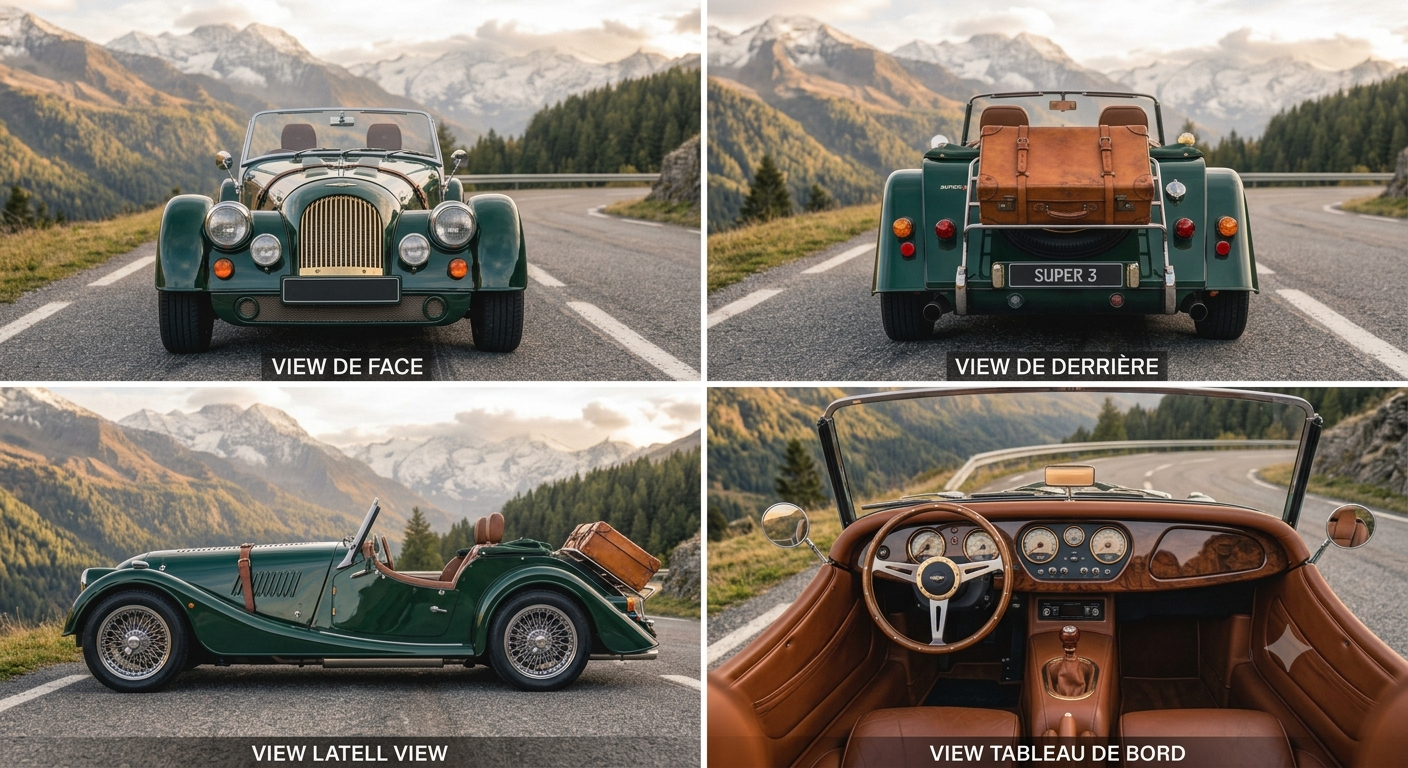
Hero image: A Morgan Cabriolet in British Racing Green on a country road
Wood frame construction: Showing the ash wood frame before body panels are fitted
Engine bay shot: Close-up of the Duratec engine
Interior shot: Showing the classic leather interior
Rust inspection images: Showing common rust spots with arrows
Leaf spring image: Showing the traditional rear suspension
Driving shot: Open-top driving on a sunny day